Bereaved families across Wales need better and more consistent support when they experience baby loss, a bereavement midwife has told a summit at the Senedd in Wales.
RCM member Christie-Ann Lang, a specialist bereavement midwife at Swansea Bay University Health Board, highlighted the inequalities in bereavement care in a presentation to the Baby Loss Summit held at the heart of the Welsh Government this week.
In her talk, she shared her experiences of supporting families through baby loss and highlighted the pressures facing bereavement services.
RCM Cymru also attended the summit, joining bereaved families, healthcare professionals, charities and policymakers to discuss how support and awareness around baby loss can be improved in Wales.
Christie-Ann told the summit that baby loss around pregnancy was traumatic for the women who experience it and they had significant support needs following their loss. She explained that while Wales has some specialist bereavement midwives who provide immediate support and follow-up care, significant gaps remain.
These include:
- Limited access to specialist psychological services and long waiting lists
- Variations between Health Boards
- A lack of protected funding
- Insufficient staffing to provide consistent follow-ups after a loss and throughout subsequent pregnancies.
Speaking to the summit, Christie-Ann said: “Bereavement support is often dependent on individual staff commitment rather than systematic investment. Midwives are working over their hours, going above and beyond their role to ensure the needs of families are met.”
Christie-Ann set out three clear priorities for change:
- Sustainable funding, including protected bereavement staffing and expansion of specialist roles
- Access to psychological support, with dedicated pathways and faster access to trauma-informed therapy
- National equity across Wales, with consistent standards regardless of postcode.
She added: “If Wales is committed to equitable maternity care, then bereaved families deserve equitable bereavement and psychological support wherever they live, whatever their ethnicity or religion, age, gender of social status.
“The question we need to ask is not whether bereavement is needed but whether we in Wales are prepared to fund and resource the vital services at a level that matches the need of the families we serve.”
Julie Richards, RCM Cymru Director, said: “Christie-Ann spoke so passionately about this. Her message to the summit was clear: bereavement care is not an additional service but an essential part of safe, compassionate maternity care. Her presentation brought home the difference that bereavement midwives make and the pressures these services are facing.
“We back her three asks – these are practical steps which would make a real difference to bereaved families and to the staff who care for them.”
The summit comes ahead of Baby Loss Awareness Week (9-15 October), when families, charities and healthcare professionals across the UK come together to remember babies who have died and raise awareness of pregnancy and baby loss.
Julie added: “This summit was an important and timely opportunity to listen to bereaved families and the staff who care for them. It’s important now that these conversations lead to actions. Equitable care is essential, not optional.”
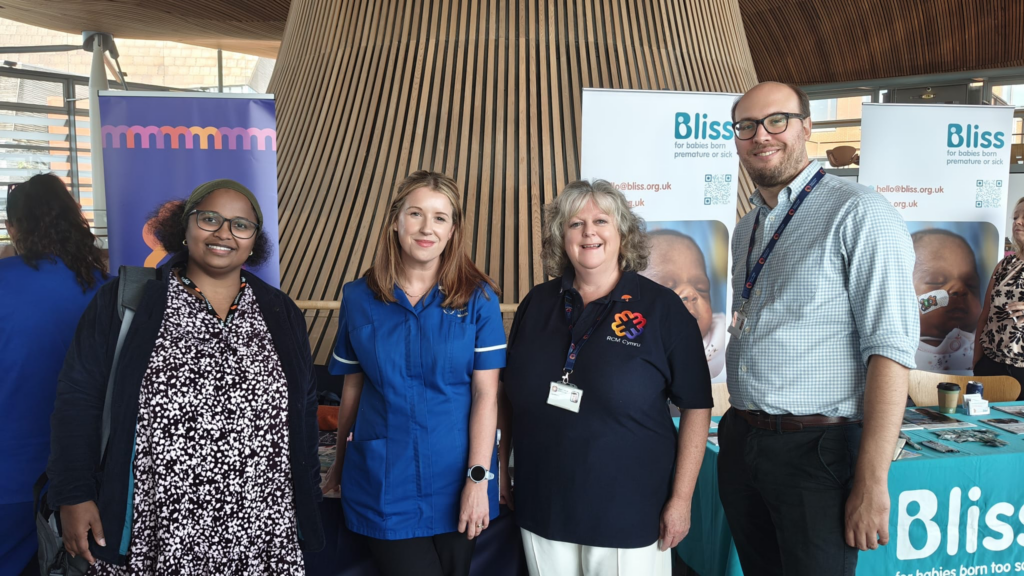
- Pictured in photo at top, from left: MS Safa Elhassan, bereavement midwife Christie-Ann Lang, RCM Cymru Director Julie Richards and RCM Public Affairs Advisor Mike Indian