The NHS autumn vaccination programme got underway on 1 September 2026, and once again midwives have an important role in helping pregnant women understand which vaccinations are available to them and why they are recommended.
With different vaccines recommended at different stages in pregnancy, and with the common questions about timing and vaccination safety, we’ve pulled together some of the key information you need to know this autumn.
Why are vaccines in pregnancy so important?
Vaccination is the most effective way of protecting a baby from life-threatening vaccine-preventable diseases. When a pregnant woman is vaccinated, the protection she generates will transfer across the placenta to the unborn baby, which means the baby will have some maternal antibodies providing protection against RSV, pertussis and flu as soon as they are born. Physiological changes in pregnancy mean that pregnant women may be more vulnerable to complications from certain diseases, such as flu, even if they are otherwise fit and well.
Does the timing of vaccinations matter?
It takes time for the immune system to generate full protection following vaccination, so that even once an individual is vaccinated it can take a few weeks before a full response is mounted. Women should be encouraged to be vaccinated at the recommended times, but vaccination at later stages will still offer some protection.
Which vaccinations are recommended during pregnancy?
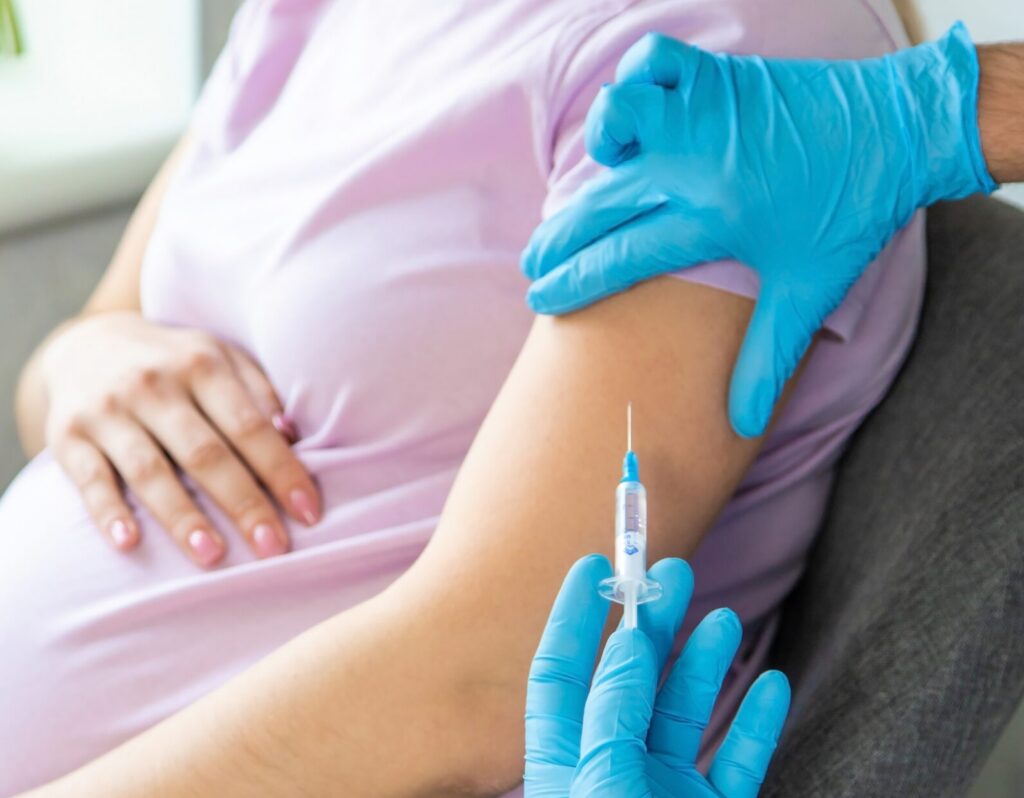
Pregnant women are routinely offered vaccinations against flu, respiratory syncytial virus (RSV) and whooping cough. Each protects against an infection which can pose a particular risk either during pregnancy or to babies in their first weeks and months of life.
What about the Covid-19 vaccine?
No, this isn’t routinely offered in pregnancy anymore. The Covid-19 vaccination is this year being offered to people aged 75 and over and people who are immunosuppressed. A pregnant woman who meets the immunosuppression criteria may still be eligible.
When can pregnant women get their flu vaccine?
The 2026/27 NHS flu vaccination programme for pregnant women began on 1 September. Pregnant women are among the groups being offered the vaccine from the beginning of September, ahead of the wider adult programme which rolls out on 1 October. The flu vaccine can be given at any gestation of pregnancy – ideally at the beginning of the season before the flu starts to circulate.
When can a pregnant woman have the RSV vaccination?
The RSV vaccination programme launched in September 2024. It’s offered from around 28 weeks of pregnancy and helps protect babies against RSV during the first months of their lives, when they are particularly vulnerable to this infection.
There is some really encouraging evidence about the programme’s impact. UKHSA data published earlier this year found maternal RSV vaccination can reduce babies’ risk of hospital admission with RSV by up to 85%. In the first full year of the programme, intensive care admissions among newborn babies with RSV also fell by around half.
There is, however, still work to do on the uptake. The latest published figures show that 62.2% of women who gave birth in March 2026 had received the RSV vaccination during pregnancy. Encouragingly, though, this is going up from the previous figures where uptake was 53%.
When is the whooping cough (pertussis) vaccination offered?
This is offered at around 20 weeks of pregnancy, though it can be given as early as 16 weeks. To offer the best protection, the vaccine should be given before 32 weeks but can be given later. This is particularly important because whooping cough can be extremely serious for young babies.
Why do conversations with midwives matter?
We know that midwives are a trusted source of information for women throughout pregnancy, and conversations about vaccinations should support women to make informed choices, providing clear, evidence-based information without pressure of judgement. Women will understandably have questions, particularly when several different vaccinations are recommended during pregnancy.
We also know that our members need the time, information and resources to have these conversations properly, which is why we have put together vaccination resources to help give you confidence.
What resources are available to midwives?
RCM webinar: Our vaccination in pregnancy webinars brought together experts to discuss the latest evidence and guidance. You can watch the recording of the recent webinars here.
i-learn module: Our vaccination modules covers common questions and misconceptions about vaccination during pregnancy and approaches to supporting informed decision-making.
NHS: Information on vaccinations recommended during pregnancy is available on the NHS website.
UKHSA: You can also find detailed guidance on the national vaccination programmes and the evidence underpinning them on the UKHSA website.