Before travelling to Lisbon for the ICM 34th Triennial Congress, I wrote that I hoped to leave with the same passion for midwifery and a greater understanding of maternity care around the world. I can now say with certainty that I left with far more than I ever imagined.
Like many student midwives, the end of second year brought a mix of emotions—relief at completing another demanding year, but also deep fatigue from balancing assignments, placements, work, and personal life. Attending the congress came at exactly the right moment. It reconnected me to the reasons I chose midwifery in the first place.
A Powerful Start: Unity in Action
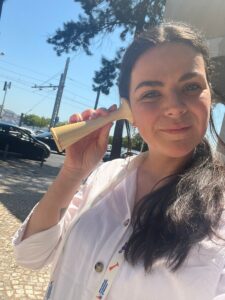
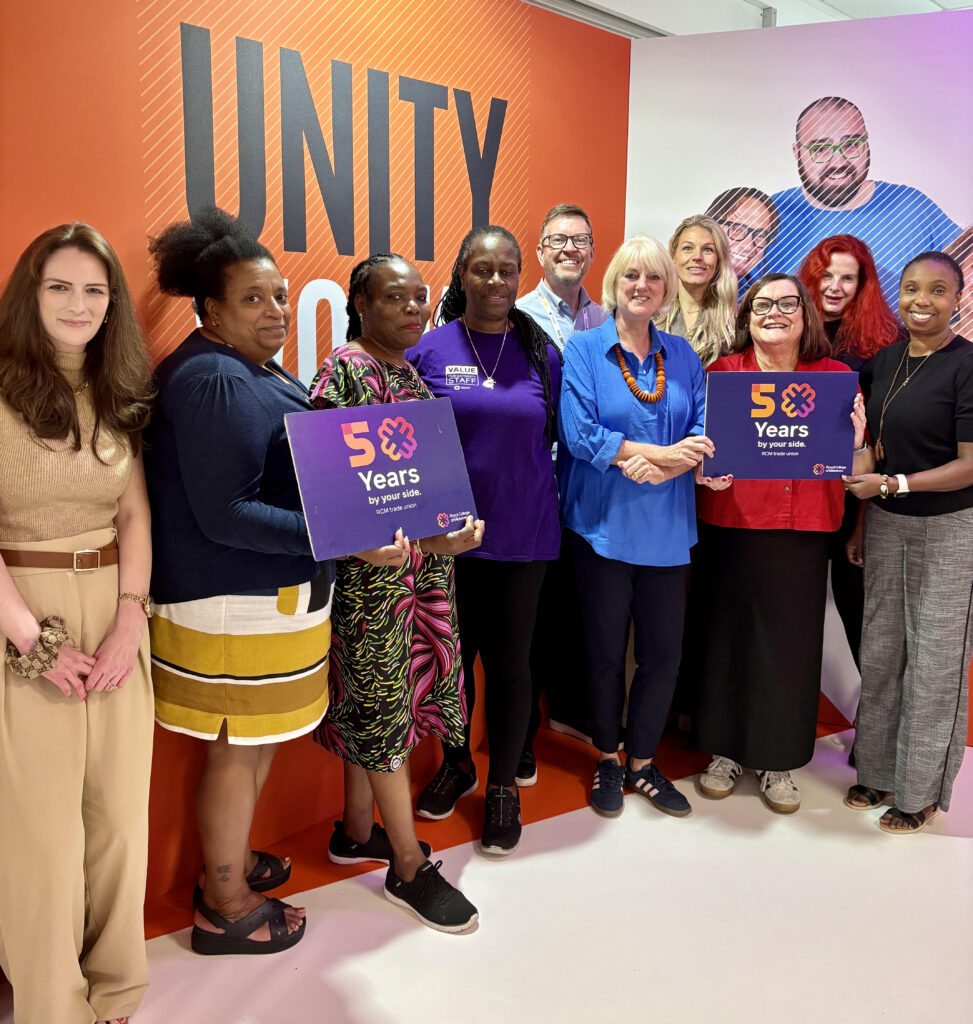
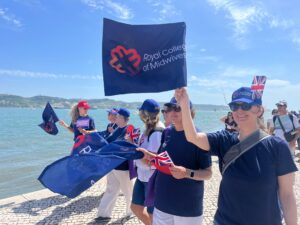 My experience began on Saturday, when I met my blogging partner, Theodora Loumousioti (Midwife and Senior Lecturer at ARU). Together, we set out to document the week through photos and videos. We were warmly welcomed by the RCM team and, within minutes, found ourselves taking part in something truly unforgettable: the One Million More Midwives march.
Over 3,000 midwives from across the globe came together, some travelling from as far as New Zealand and Papua New Guinea to make their voices heard. The atmosphere was electric, filled with unity, determination, and hope for safer staffing in maternity care worldwide. The march concluded with singing and dancing to “Together, One Million More Midwives,” a powerful anthem written and performed by Abelone especially for the congress.
That same sense of connection carried into Sunday’s opening ceremony. Portuguese midwives welcomed delegates with vibrant singing and dancing, proudly sharing their culture. The flag ceremony was particularly moving, with strong support shown for midwives continuing to care for women in countries facing conflict and crisis.
Learning Without Limits
Over four days, the congress offered almost 100 sessions, talks, workshops, panels, and skills training. Choosing which to attend was no easy task, with some sessions drawing queues 30 minutes in advance.
Each day began with plenary sessions addressing key global issues in maternity care. A standout moment for me was hearing from Paola Salwan Daher, director of Women Deliver and a human rights lawyer. She passionately emphasised that safe and respectful maternity care is not optional it is a fundamental human right. Sharing that 61% of maternal deaths occur in countries affected by conflict, she issued a powerful call for peace, earning a well-deserved standing ovation.
Tuesday’s plenary session was equally eye-opening, highlighting issues I had previously been unaware of. From the impact of climate change on maternity care in Pakistan to the lack of access to midwives for women in Chilean prisons, these discussions revealed the complex realities faced globally.
One particularly impactful insight came from Prof. Eunice Atsali, who explained how the introduction of heat-stable carbetocin has helped reduce postpartum haemorrhage (PPH) in Kenya, where it remains a leading cause of maternal mortality. It became clear to me that while the call for one million more midwives is critical, it is equally important that they are placed where they are most needed, with access to the right equipment and medicines.
Challenging Perspectives and Deepening Understanding
Throughout the week, I attended sessions that challenged me to think more deeply about culturally safe care.
A powerful session on obstetric violence, led by Nafiza Anwar of ASAM UK, highlighted that South Asian women experience disproportionately poorer maternity outcomes. She shared accounts of communication barriers and women feeling dismissed, leaving us with a striking reminder: “Silence does not mean safety.”
Another deeply moving moment came when Sarian Kamara, founder of Keep the Drums, Lose the Knife, shared her personal experience of FGM. Hearing her story was profoundly impactful—teaching me lessons far beyond what any classroom could offer.
Rethinking Models of Care
The congress explored maternity care from every angle, including the increasing medicalisation of childbirth. Speakers from across the world raised important questions: who is being prioritised in maternity care, and where do midwives fit within these systems?
In contrast, I also learned about midwife-led models in countries such as Portugal, New Zealand, the USA, and Canada. These models emphasise partnership—between midwives, multidisciplinary teams, women, and families—supporting birth in midwife-led units or at home.
These sessions reinforced the importance of questioning practice. One question posed to us was: “What really is a physiological birth?” As students, we are used to asking questions—but this experience highlighted the true value of pausing and asking why.
A Renewed Passion
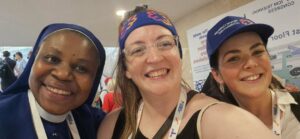 Attending the ICM Congress has been one of the most inspiring experiences of my training so far. Seeing thousands of midwives come together—to advocate, to learn, and to share knowledge regardless of experience—was incredibly powerful.
I have come away with a renewed passion for midwifery, a greater appreciation for the global challenges we face, and a deeper belief in the impact of research and evidence in driving change. Midwives make up 90% of the world’s maternity workforce, and their collective voice is a powerful force for improvement.
Looking Ahead
Throughout the week, I met incredible midwives who are not only clinicians but also educators, leaders, and policy makers. Their insights and experiences are something I will carry with me throughout my career.
I would strongly encourage fellow student midwives to apply for opportunities like this. It may push you out of your comfort zone, but in the best possible way. Alongside the learning, I also had the chance to explore the beautiful city of Lisbon a bonus I won’t forget!
Looking ahead, the next ICM Triennial Congress will take place in Abu Dhabi, UAE in 2029, offering another exciting opportunity for future student bloggers.
This experience has encouraged me to get more involved more going forward with RCM events and opportunities, especially with some of the great work they do with student midwives. Thank you again to the RCM for the opportunity I was given and to everyone I had the pleasure of meeting in Lisbon. To Theodora thank you for being a wonderful blogging partner and all-round lovely person to meet.