member survey results 2026
We surveyed 3,500 members at the start of June, asking about their working week from 1-7 June. Here’s what the survey showed:
What is your role?
3,523
members responded. Of these, 3,146 were midwives (89%), 163 MSWs/MCAs 5%), 173 students (5%) and 41 other (1%).
How long have you worked in maternity?
Under 1 year – 203 (6%)
Between 1 and 5 years – 983 (27%)
Between 6 and 20 years – 1,399 (40%)
Over 20 years – 983 (28%)
Which part of the UK do you live in?
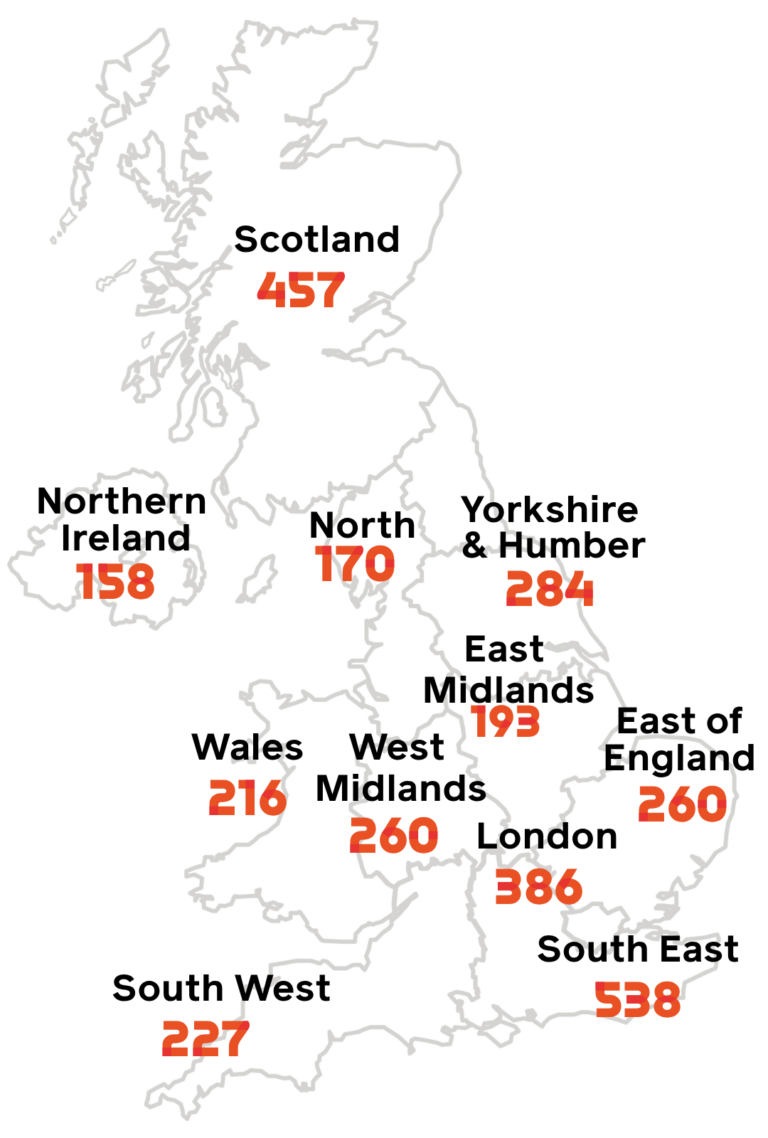
During the week of 1-7 June, did you work extra unpaid hours beyond your scheduled shifts?
77%
worked unpaid hours during the week of 1-7 June 2026.
Unpaid overtime has become routine. In a single working week, 77% worked beyond their contracted hours without pay. For one in five, that was more than five hours of their time given for nothing.
How many unpaid hours did you work during that week in total?
10 hours or more – 195 (6%)
More than 5 but less than 10 – 568 (16%)
Up to 5 hours – 1,902 (54%)
I did not work extra unpaid hours that week – 859 (24%)
In the week of 1-7 June, did you feel that your team/unit was safely staffed?
77%
said they didn't feel their team/unit was safely staffed.
Yes – 812 (23%)
No – 2,713 (77%)
What is it that makes you feel staffing is not safe? (Tick all that apply.)
Numbers of women and babies to care for
Having to work tired due to excessive working hours
Staff not having adequate training
Inadequate skill mix
Level of clinical need
Lack of support staff
Level of non-clinical demands
Other
Did you feel that staffing levels in your unit/team affect the quality of care you are able to provide to women and babies?
93%
said they felt that staffing levels affected the quality of care they were able to provide to women and babies.
In the week of 1–7 June alone, The most fundamental finding: nine out of 10 respondents said that how many staff are on shift has a direct bearing on the quality of care they can provide.
Were you able to take all your breaks without being interrupted for work?
83%
weren’t able to take breaks without being interrupted.
Yes – 585 (17%)
No – 2,941 (83%)
Did you have at least 24 consecutive hours uninterrupted by work?
Yes – 2,472 (70%)
No – 1,054 (30%)
Were you required to work more than 48 hours over the week (including time on call where you were called out)?
Yes – 375 (11%)
No – 3,154 (89%)
Did you have at least 11 hours of uninterrupted rest every 24 hours?
38%
did not get 11 hours of uninterrupted rest every 24 hours - a legal entitlement.
Yes – 2,180 (62%)
No – 1,349 (38%)
Have you had to undertake mandatory training in your own time over the last year?
70%
have had to do mandatory training in their own time over the last year.
Yes – 2,455 (70%)
No – 1,074 (30%)
Have you considered leaving your role in the last year?
75%
have thought about leaving their role as a midwife, student midwife or MSW/MCA in the last 12 months.
Staffing levels was the top reason why – with 65% stating this as why they considered leaving. The next top reason was because of safety concerns (54%).