Scotland’s Independent Review of Maternity Services must deliver real change for women, babies and midwives, the Royal College of Midwives (RCM) has said, after the Scottish Government confirmed the review will get underway after the summer.
It will be chaired by Professor Christine McCourt, a leading maternity researcher who brings years of evidence and experience to the role.
The scope of the review incorporates many of the RCM’s key asks from its manifesto and safe staffing campaign – a clear sign that the Scottish Government has listened to members.
It will look at the whole maternity journey – from pregnancy through birth and beyond – in both hospital and community settings. Workforce, culture, leadership and governance will be central.
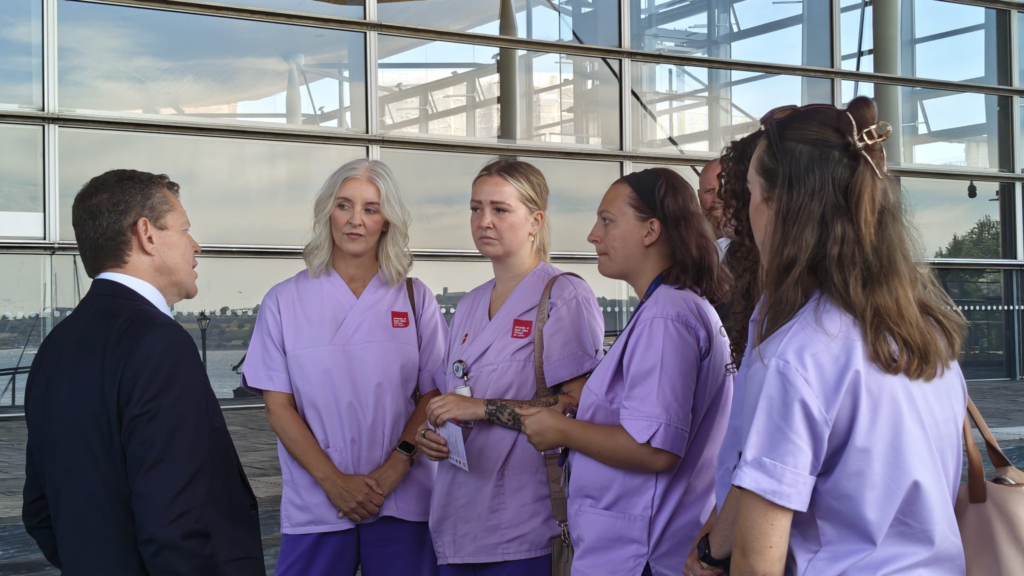
Jaki Lambert, RCM Scotland Director, was at Holyrood for the announcement and met Cabinet Secretary for Health and Social Care Angela Constance immediately after the statement.
Jaki said: “This is an important opportunity for Scotland to take a hard look at the future needs of maternity services.
“The Scottish Government has clearly listened to what the RCM has been saying and the scope of this review reflects what we have campaigned for in our manifesto and safe staffing campaign, with workforce front and centre.
“In our meeting the Cabinet Secretary was really listening and asking good, relevant questions. It’s positive that maternity services are being prioritised this early in the parliament, and that the review will be completed in months rather than years.
“The appointment of Professor Christine McCourt as Chair is a real positive – she brings years of experience in maternity research and a strong evidence base to the role.”
The nine-month review will also shine a light on maternity services in rural and island communities, including the experiences of women in Caithness, Wigtownshire and Elgin. It will also focus on care for women at greater risk of poorer outcomes, including Black and Asian women and women facing multiple complex social and clinical disadvantages.
The voices of women, families and maternity staff will be heard throughout and the review will draw on existing evidence, including the findings of Healthcare Improvement Scotland’s ongoing programme of maternity inspections.
All 18 of Scotland’s maternity units are due to be inspected by March 2027, with inspections so far identifying common themes including staffing shortages and delays in care.
For the RCM, the review must be a catalyst for action, not a reason to delay it.
Jaki added: “”For too long, there has been too little focus on women’s healthcare – care that is provided predominantly by women. What matters now is that this review leads to action. The inspections carried out so far have already identified gaps, and we cannot wait until all 18 are complete before acting on what we already know.
“The next steps following this review will be key to driving forward the change that women, babies and midwives desperately need and that has to include a long-term workforce plan.”
Professor McCourt will publish the full scope and terms of reference for the review following engagement with women and families, staff, the Scottish Maternity and Neonatal Taskforce and other stakeholders, including professional organisations.