In this blog, RCM Director for Scotland Jaki Lambert reflects on the launch of our Scotland Manifesto and the powerful message at its heart: safe staffing equals safe care. Drawing on the voices of midwives, maternity care assistants, students and leaders from across Scotland, Jaki sets out why this campaign belongs to members – and why now is the time for change.
Earlier this month we launched our Scotland Manifesto and what a powerful day it was.
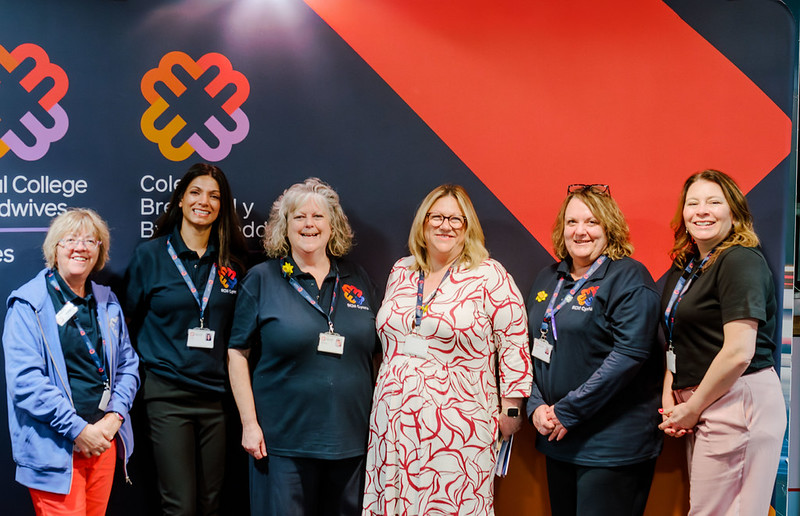
We brought together midwives, maternity care assistants, students, educators, and midwifery directors.
All united by a shared passion for giving women, babies and families the care they deserve.
But what made the day truly special was hearing directly from you and your colleagues.
Your passion for midwifery shone through as you spoke about each of the manifesto’s seven priorities.
These are your asks, born from your lived experiences on the frontline.
Our first key ask is safe staffing. Alison McBride and Pamela Higgins, co-chairs of the LAMPs network, brought their combined 60 years of experience to the discussion.
They reminded us that while they’ve spent their careers working to make care better, this can only happen with the right workforce and skill mix.
Alice McCormick, previous chair of the Early Career Midwives (ECM) network, shared findings from their recent survey about what matters most to those starting their careers.
Clinical educators and having a named person on every shift make a massive difference but not when staff are continually pulled away to cover gaps caused by short staffing.
The stark reality is that in the past decade, Scotland’s midwifery workforce has increased by just 7.9% – nearly half the rate of nursing (13.4%) and less than a quarter the rate of doctors (28.4%). We’re being stretched beyond breaking point.
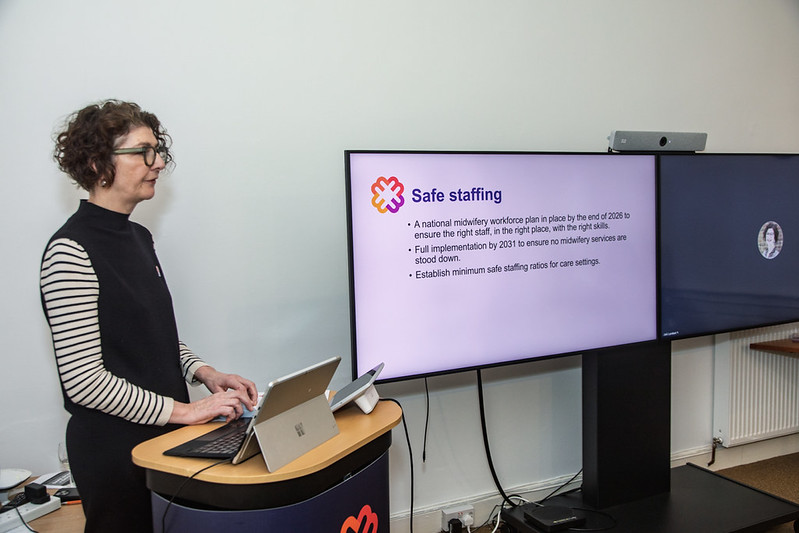
This is why we’re calling for a national midwifery workforce plan to be in place by the end of 2026, with full implementation by 2031.
We also need to start working on establishing minimum safe staffing ratios for care settings beyond one-to-one care in labour.
Isla Love, previous chair of the Student Midwives Network, spoke about the anxiety that haunted her peers throughout third year – not knowing if they would get a job.
Kelly Croudace and Susan Petrie from Moray shared why maternity care assistants should have an ‘earn-as-you-learn’ route to become midwives, just as colleagues can already do to become nurses.
Donna Brough, consultant midwife and chair of SMile, spoke about the importance of leadership and why we’re calling for consultant midwives in every obstetric unit in Scotland.
We’re also calling for the Chief Midwife for Scotland post to be made permanent and statutory and a Director of Midwifery in every health and special board. Strong leadership at every level drives the transformation we need.
Hilary Alba MBE reminded us why community midwifery matters. As a specialist midwife, she supports marginalised women facing multiple complex needs.
This essential work is being depleted as staff are pulled to cover acute care and inspections that focus only on acute settings make it invisible.
We’re calling for maternity inspections to cover community settings within 12 months, for 200 advanced-practice midwives to be educated by 2031 and for investment in break spaces and improving inadequate maternity estates.
What struck me most was the genuine interest from the politicians who attended. I left feeling hopeful we have cross-party support, including commitment for a cross-party group on maternity services.
A distinct uniform for midwives was seen as a ‘quick win’ – something achievable that would make a real difference. But best of all was hearing our amazing community sharing their love for midwifery and their commitment to being part of the change.
Please get involved in your local RCM branch or join one of our networks. Your voice matters. Your experience matters. Together, we can make this manifesto a reality.