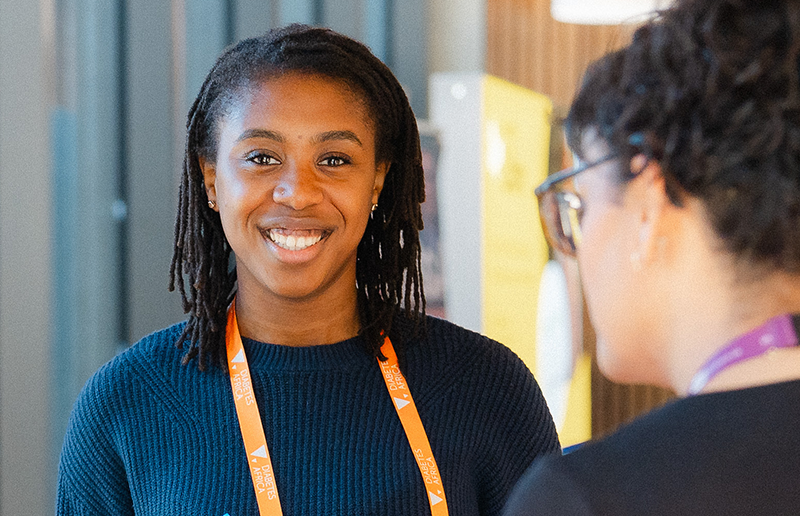
When Oluwaseun Labisi was deciding on a career, she knew she wanted to work in healthcare. Growing up in a large family, she had witnessed pregnancy often and was fascinated by it. But it was also personal. As a teenager, she listened to relatives describe stillbirth and difficult maternity experiences. Hearing, in detail, where care had fallen short shaped the way she thinks about maternity services to this day.
“I always come back to the question: what care would I want my family to receive? And am I delivering that care?”
Today, Shay is in a developmental role as a consultant midwife for public health at Lewisham and Greenwich NHS Trust. Her role spans clinical practice, service development, leadership and research. It also places her at the centre of an issue that demands earlier and clearer conversations: diabetes and pregnancy.
Conversations that start too late
Across South East London, Shay has seen more women presenting with diabetes, particularly in ethnically diverse communities. Some enter pregnancy with Type 1 or Type 2 diabetes and are well informed. Others are diagnosed with gestational diabetes and are shocked.
“The feedback I hear most often is, I wish I’d known this sooner,” she says.
What women are referring to, she explains, are the practical realities: the need to take 5mg folic acid before conception, to optimise blood glucose levels, to review medication, and to understand the specific risks diabetes can carry in pregnancy. For many, that information arrives after they are already pregnant.
For Shay, that is where midwifery makes a difference. Pregnancy preparedness in diabetes is not only about managing blood glucose once a woman has booked her appointment. It is about what happens before conception: identifying risk factors such as PCOS, offering clear advice early, and ensuring women know where to seek support.
She believes many professionals underestimate how far a small intervention can travel. “A little bit goes a long way. Sometimes you just need to plant the seed. Even if you cannot do everything in one appointment, giving someone a reliable source of information can make a real difference.”
Equity in real practice
As a consultant midwife for public health, Shay’s work extends beyond individual consultations. She works with local authorities, commissioners and multidisciplinary teams to examine how services are designed and who they miss.
Equity in diabetes and pregnancy, she says, begins with questioning assumptions. “We often design services for the person who books early, who has internet access, who can attend multiple appointments in a week. That is not everyone’s reality.”
She describes women juggling scans, obstetric reviews, diabetes clinics and midwifery appointments while working zero-hours contracts or living in temporary accommodation. In asylum seeker hotels, she has advocated for changes to fixed menus that were unsuitable for women trying to control gestational diabetes through diet.
“We need to look at the whole system and ask whether it is optimised for the people who are experiencing the worst outcomes.”
For Black women living with diabetes, barriers may include culturally irrelevant dietary advice, misinformation circulating on social media, and deeply embedded assumptions about pregnancy being straightforward and uncomplicated. Shay urges colleagues to leave assumptions at the door.
“Be professionally curious. If someone’s blood sugars are not well controlled, ask why before you advise. There are often very valid reasons.”
Shifting the conversation
Over the past six months, Shay has been involved in the Equity in Diabetes and Pregnancy project delivered in partnership with Diabetes Africa and Guy’s and St Thomas’, and supported by the Burdett Trust for Nursing. Reviewing data on pregnancy preparedness, including disparities in folic acid use, has reframed how she speaks to women postnatally and in clinic.
“It has changed the way I start conversations. If someone has not been taking folic acid, I say, it’s fine, you can start now. And in future, this is when you would want to begin.”
She has also used the SHIFT conversation cards, short, accessible prompts designed to open up discussion about diabetes and pregnancy with both staff and women. “It leaves people with a golden nugget. It makes education feel lighter, but the impact can be significant.”
A broader vision for midwifery
Shay’s career illustrates the expanding possibilities within midwifery. After working in continuity models and homeless health, she undertook a Masters in Women’s Health to deepen her public health lens. She is one of only two consultant midwives for public health in South East London.
For midwives reading this, her message is clear. “If you want to make one change tomorrow, start with professional curiosity. Find out about the person in front of you before offering advice.”
And for those considering leadership or public health roles, she encourages involvement. “There are so many opportunities. Get involved in projects, in your community, in service development. We need more midwives shaping the system, not only working within it.”
Earlier, clearer conversations about diabetes and pregnancy do not require an overhaul of the profession. They begin in everyday encounters, in small moments of curiosity, and in a willingness to design services around the women who need them most.
[Photography: Wojtek Chrapek for Diabetes Africa]