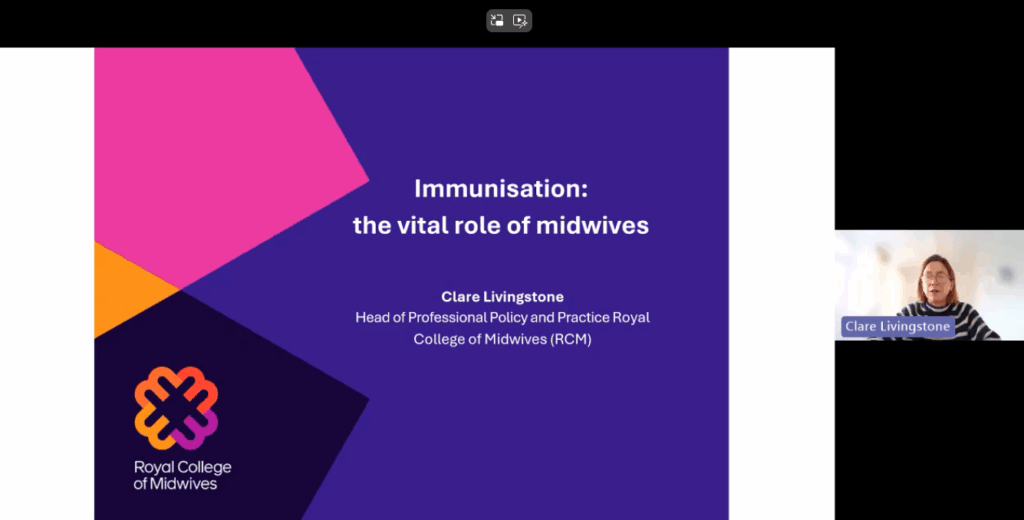
Midwives play a critical role in supporting women and families to make informed decisions about vaccination in pregnancy – but they need adequate time, training and resources to support this work, the Royal College of Midwives (RCM) highlighted in a national webinar.
Speaking at a UK Health Security Agency (UKHSA) webinar on maternal vaccinations, Clare Livingstone, Head of Professional Policy and Practice at the RCM, set out the unique and trusted position midwives hold in discussing vaccines with pregnant women.
Clare said: “We were pleased to be invited to speak at this webinar and to contribute to such important discussions about maternal vaccination. It’s vital that consistent, evidence-based messaging is shared across the system and that the role of midwives is clearly recognised and supported. Bringing partners together in this way is an important step in ensuring women receive the right information, at the right time, from professionals they trust.”
In her presentation, Clare emphasised that midwives are often the most trusted healthcare professionals for women during pregnancy and are therefore key to providing accurate, evidence-based information about vaccinations, supporting informed decision-making and respecting individual choices.
Clare also outlined the range of responsibilities midwives may have in relation to vaccinations, including discussing the benefits and safety of vaccines, administering vaccinations where appropriate or referring women to other services and ensuring consent and vaccination status are accurately documented.
However, she also acknowledged the significant challenges facing the maternity workforce. These include increasing public health responsibilities, workforce shortages, pressure on physical space within services and limited resources to implement new or expanding vaccination programmes.
“Midwives are committed to supporting public health goals, but this must be matched with realistic expectations,” Clare said. “Without sufficient workforce capacity, physical space and resources, it becomes increasingly difficult to deliver new programmes safely and consistently.”
The webinar formed part of UKHSA’s Communicating Vaccines series and brought together experts from across the maternity and public health system to explore maternal vaccination pathways, current uptake and strategies to improve access and confidence. Sessions included clinical updates on flu, pertussis and RSV vaccination in pregnancy, insights from recent pregnancy survey findings and examples of innovative practice.
The RCM continues to support midwives in this area through its education and professional development offer, including an iLearn module focused on vaccination in pregnancy.
“The role of the midwife in vaccination is about trust, communication and continuity of care,” Clare added. “To make a real difference to uptake and reduce inequalities, midwives must be properly supported to do this work well.”
- The webinar can be viewed online here