The Royal College of Midwives (RCM) in Wales has said that listening to frontline staff and using their knowledge to drive improvement must be at the heart of efforts to strengthen maternity services across Wales.
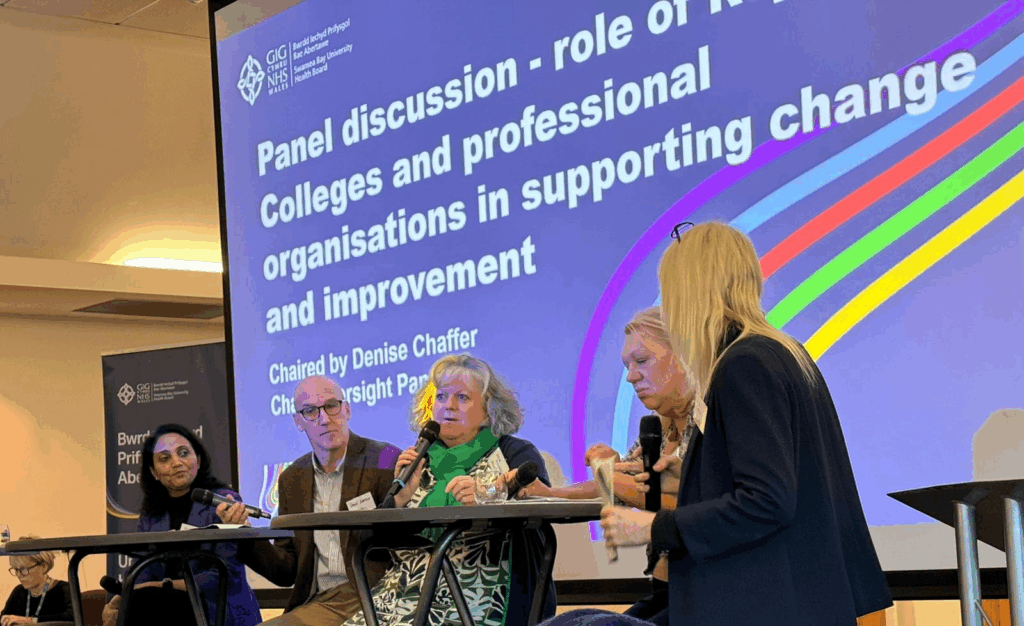
Julie Richards, RCM Director for Wales, was among those asked to join a panel discussion at the Swansea Bay Maternity and Neonatal Learning and Improvement Conference this week.
The event brought together families, midwives, professional organisations and leading experts to build on the findings of the Independent Review into Swansea Bay’s maternity and neonatal services.
The review, published in July, identified issues including chronic understaffing, not listening to women and their families, and boards not listening to their own staff.
Speakers at the learning event included Independent review Chair Denise Chaffer and panel members Edile Murdoch, Tony Kelly and Sally Land and Joanna Hughes from the Harmed Patient Alliance. The afternoon featured a conversation with the regulators and insights from the clinical team at Swansea Bay Health Board.
Julie Richards, RCM Director for Wales, said:
“This conference demonstrated the power of bringing families, staff working in maternity and neonatal services and decision-makers together in one room. Hearing from women about their experiences, particularly around neurodiversity and perinatal mental health, was incredibly valuable.
“Listening to staff who understand these services from the inside was a reminder that they have the knowledge we need to drive improvement—we just need to make sure their voices are heard by those making the decisions.”
Julie was on a panel with Geeta Kumar from the Royal College of Obstetricians and Gynaecologists, Stephen Wardel, from the British Association of Perinatal Medicine and Helen Whyley from the Royal College of Nursing to discuss the role of royal colleges and professional organisations in supporting change and improvement.
The panel emphasised the importance of multidisciplinary training and fostering a positive working culture where staff feel supported and safe to speak up.
Julie added:
“We all agreed that executive board engagement needs to increase significantly. Maternity and neonatal services must be prioritised, both from a moral and financial perspective. Investment is urgently needed to ensure women and families receive the best possible safe care.
“We also highlighted that getting the maternity and neonatal workforce right is fundamental. We need the right staff, in the right place, at the right time, with the right education and training.
“Making sure we have the right skills mix is just as important. Using staff appropriately, like maternity support workers, to free up midwives for more specialist tasks could make a big difference.
“The RCM will continue to stand up for high standards, particularly around raising concerns. Executive teams need to listen to the families who use maternity services and to the staff who work in them. Without that, we won’t see the sustainable improvements that every woman, family and midwife deserve.