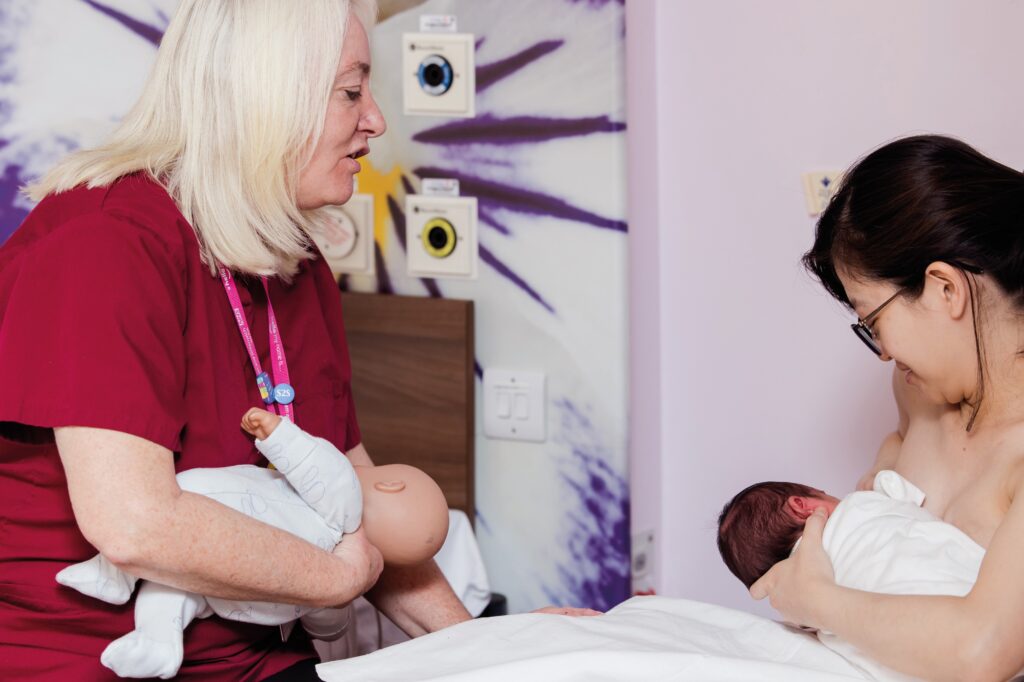
Homerton Hospital is a diverse, inner London, district general hospital. Working here, we see so much diversity of families accessing the hospital’s maternity services, but we are also aware of the international, national and local inequalities faced by Black, Asian and Global Majority women, babies and families. We know that these women are at a greater risk of poorer care and worse outcomes, both for themselves and for their babies. Black, Asian and Global Majority women experience higher rates of hospital admission pre- and post-birth, complications during birth and maternal deaths. Babies born to Black, Asian and Global Majority mothers are more likely to have lower birth weight, be admitted to neonatal intensive care or be stillborn. We know that these poor outcomes are driven by many factors (see Figure 1): social disadvantage (low income, limited access to support and language barriers); increased prevalence in health conditions (obesity, cardiovascular disease and mental ill health); lower trust of public services; and discrimination by public services (obviously linked with lower levels of trust).
Optimising warm compress during birth: a quality improvement project
Jennifer Prescot
September 2026
Maternity Reports and Resources
Maternity reports and resources: what’s new?
September 2026
Labour and Birth
Success of induction of labour among Black women in the UK: a scoping review
Rita Kotey
September 2026
Cookie options
Some of these cookies are necessary to make the site work. We’d also like to use optional cookies to help improve your experience on the site. You can manage your optional cookie preferences below. Using this tool will set a cookie on your device to remember your preferences. Your preferences can be changed at any time.
For more detailed information about the cookies we use, see our Privacy Policy
Necessary Cookies
Necessary cookies enable core functionality. The website cannot function properly without these cookies, and can only be disabled by changing your browser preferences.
Analytical Cookies
Analytical cookies are used to collect and report information on how our website is used. This helps us to improve the website based on the needs and behaviour of our visitors.
Marketing Cookies
We use marketing cookies to help us improve the relevancy of advertising campaigns you receive.
This site uses cookies to store information on your computer
Royal College of Midwives uses cookies for website functionality purposes. For more information, please review our privacy notice or review the settings tab.