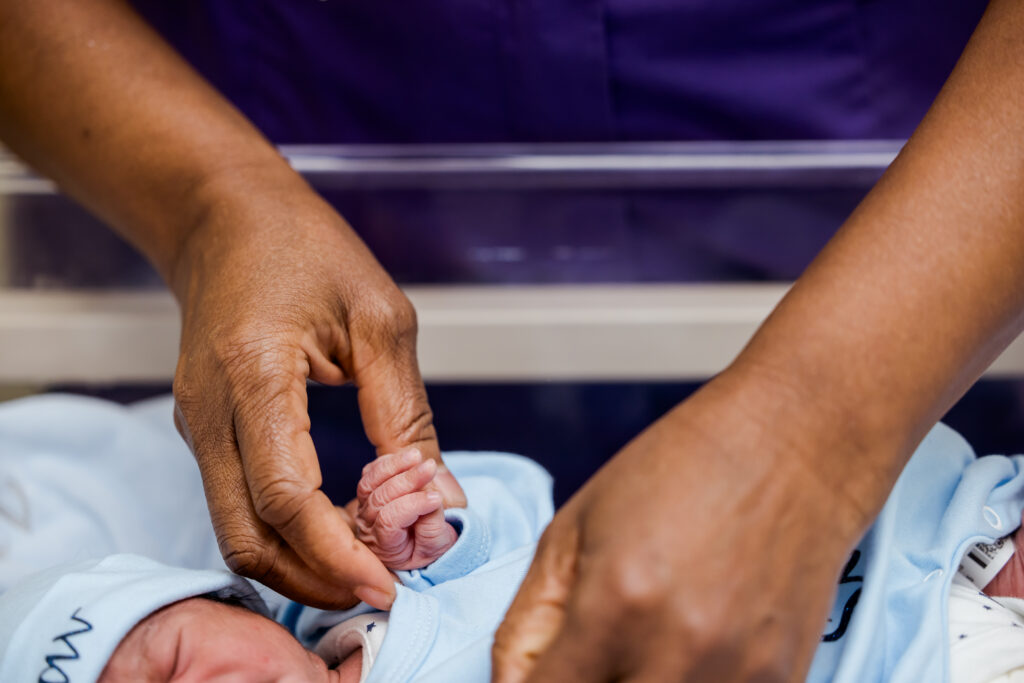
Newborn blood spot screening programme: a reflection of an episode of care and recommendations for practice
Scarlet Asquith
Abstract
The newborn blood spot (NBS) screening programme is offered to every baby born in the UK on day five of life, with the motivation to screen for nine conditions: cystic fibrosis; sickle cell disease; congenital hypothyroidism; and six metabolic disorders, including phenylketonuria and maple syrup urine disease (NHS 2024).
Gibbs’ (2013) reflective cycle has been used to guide this reflection and aid in understanding whether women are truly making informed decisions regarding the NBS screening programme. Following the Nursing and Midwifery Council (NMC)’s The code (2018), the confidentiality of the woman who is the focus of this reflection will be maintained using the pseudonym ‘Emma’. In this reflection and subsequent review of the evidence, I will investigate the midwives’ role as evidence-based practitioners and facilitators of informed consent, the development of screening policies and the care pathways they inform, and theory and practice relating to my experience. This reflection will conclude by highlighting how factors such as the timeliness of information delivery and communication barriers affect patients’ abilities to give informed consent.
Deprivation in maternity services: reviewing experiences of the perinatal period for women and birthing people affected by deprivation
Abbey Tapley,Dr Sarah Bolger
March 2026
Cookie options
Some of these cookies are necessary to make the site work. We’d also like to use optional cookies to help improve your experience on the site. You can manage your optional cookie preferences below. Using this tool will set a cookie on your device to remember your preferences. Your preferences can be changed at any time.
For more detailed information about the cookies we use, see our Privacy Policy
Necessary Cookies
Necessary cookies enable core functionality. The website cannot function properly without these cookies, and can only be disabled by changing your browser preferences.
Analytical Cookies
Analytical cookies are used to collect and report information on how our website is used. This helps us to improve the website based on the needs and behaviour of our visitors.
Marketing Cookies
We use marketing cookies to help us improve the relevancy of advertising campaigns you receive.
This site uses cookies to store information on your computer
Royal College of Midwives uses cookies for website functionality purposes. For more information, please review our privacy notice or review the settings tab.