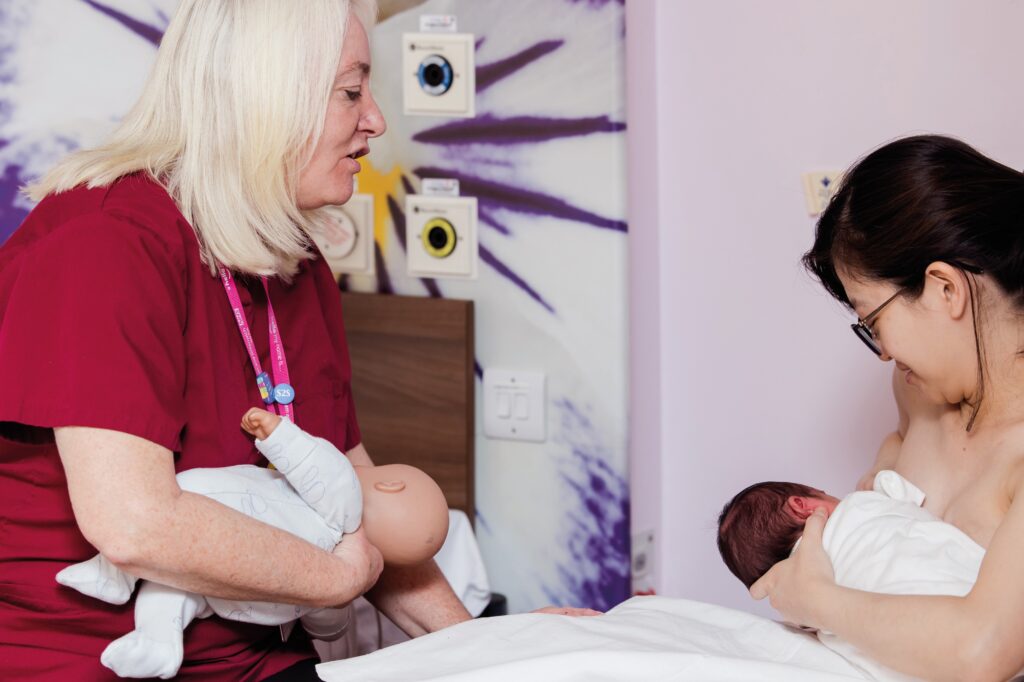
MIDIRS and the promotion of midwifery continuity of care models
Dr Sara Webb
Abstract
Introducing continuity of care models to midwifery and maternity practice stretches back to 1969, when Sawyer (1969) examined the range of specialists offering antenatal, intrapartum and postnatal care in Canada, and suggested setting up multidisciplinary committees to establish integrated care in each region. But in UK midwifery, it was Caroline Flint and colleagues who, during the 1980s, pushed ahead with piloting continuity of care schemes, primarily within London, publishing their work and findings to provide an evidence base from which it could grow (Curran 1986, Flint 1986, Flint & Poulengeris 1986). On 29 October 1988, MIDIRS held a study day in London to help midwives set up continuity of care schemes in their units (MIDIRS 1988). This was a practical workshop, based on work undertaken by Jean Cushing, who submitted a proposal to her hospital in Rhondda to set up a Know Your Midwife scheme.
Improving maternity care on the North Yorkshire coast: listening to coastal and rural voices to shape research
Clare Panaser,Garry A Tew
June 2026
Neonatal and Infant Care
Understanding the risks: what midwives need to know about women with repeated care proceedings and effective interventions
Steph Negus,Dr Daisy Wiggins
June 2026
Cookie options
Some of these cookies are necessary to make the site work. We’d also like to use optional cookies to help improve your experience on the site. You can manage your optional cookie preferences below. Using this tool will set a cookie on your device to remember your preferences. Your preferences can be changed at any time.
For more detailed information about the cookies we use, see our Privacy Policy
Necessary Cookies
Necessary cookies enable core functionality. The website cannot function properly without these cookies, and can only be disabled by changing your browser preferences.
Analytical Cookies
Analytical cookies are used to collect and report information on how our website is used. This helps us to improve the website based on the needs and behaviour of our visitors.
Marketing Cookies
We use marketing cookies to help us improve the relevancy of advertising campaigns you receive.
This site uses cookies to store information on your computer
Royal College of Midwives uses cookies for website functionality purposes. For more information, please review our privacy notice or review the settings tab.