
September 13th marks World Sepsis Day, an initiative raising awareness of one of the world’s most urgent health challenges.
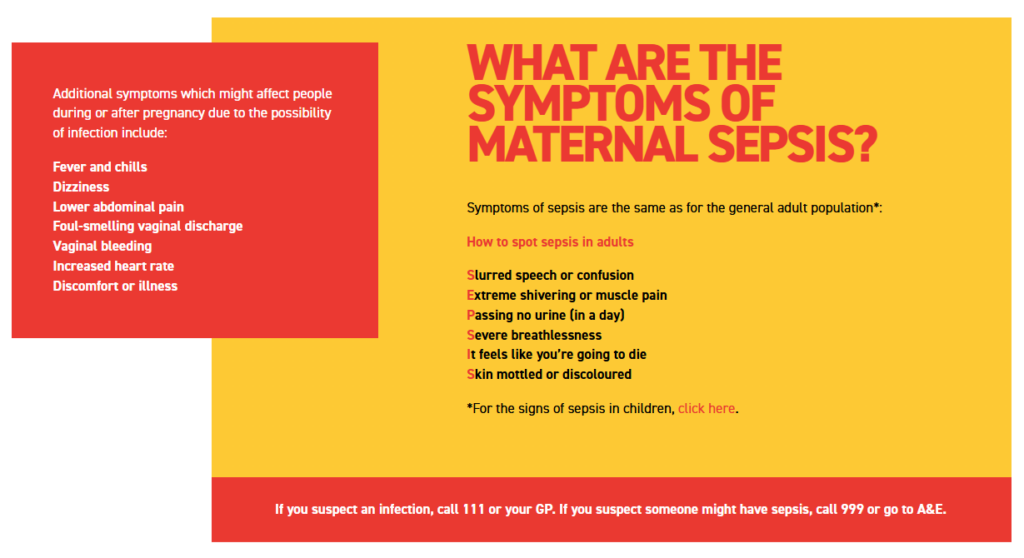
Sepsis impacts millions of people around the world each year, and is associated with 1 in 5 deaths worldwide. Of these figures, maternal sepsis contributes to a significant proportion of pregnancy- and childbirth-related deaths, with a 10% mortality rate in the UK alone (Source: UK Sepsis Trust). This World Sepsis Day, we are raising awareness of the signs of maternal and early onset neonatal sepsis, research around the topic, and resources for maternity professionals and families to stay informed.
Maternal Sepsis
Maternal sepsis is defined by the World Health Organisation as a life-threatening condition that arises when the body’s response to infection causes injury to its own tissues and organs during pregnancy, childbirth, post-abortion or the postpartum period. It is the third most common cause of maternal mortality (Source: WHO).
The most common cause of maternal sepsis is a severe bacterial infection of the uterus during pregnancy or immediately after childbirth, but it could also be caused by a urinary infection or pneumonia. Whilst sepsis cannot be prevented, maternity professionals can reduce the risk of infection developing through good hygiene practices.
Early Onset Neonatal Sepsis
Maternity professionals also play a crucial role in identifying early onset neonatal sepsis (EONS) in newborn babies. EONS in newborns is defined as infection in the first 72 hours after birth. It is caused by infections including Group B Streptococcus, Listeria and E. Coli. Newborns are at greater risk of infection due to their undeveloped immune systems (Source: NHS).
Neonatal infection is a significant cause of mortality and morbidity in newborns, and infection can lead to life-threatening sepsis, which has serious complications without quick treatment. EONS is associated with poor outcomes and survivors risk impacted development. Maternity professionals must be able to identify potential risk factors and signs of infection to ensure rapid treatment and avoid complications.
Signs of infection in newborns:
- Breathing difficulties
- Jaundice
- Abnormal temperature
- Low blood sugar levels
- Jitteriness or floppiness
- Altered behaviour (excessive crying or being very sleepy)
- Poor feeding or vomiting
The Royal College of Midwives have an i-learn module on neonatal infection which aims to deepen understandings of:
- The incidence and potential impact of neonatal infection of the neonate.
- The underpinning anatomy and physiology of immunity and why the neonate is more predisposed to infection than older children and adults.
- How to classify neonatal infection depending on the timing, location, specific pathogen and route of transmission.
- How to recognise the signs of infection including red flags.
- The different types of infection that may present in the neonatal period.
- The principles of managing neonatal infection according to guidelines.
- The role of the midwife in recognising and managing neonatal infection within their scope of practice.
This World Sepsis Day, we are encouraging all maternity health professionals to engage with the most current research and guidance on sepsis prevention and care. The UK Sepsis Trust have a wealth of resources designed to support professionals and the public in raising awareness of sepsis symptoms and guidance:
Plus , find research on our MIC database covering sepsis in maternity care:
‘The Crucial Role of Midwives in Preventing Maternal Sepsis: It All Started in a Maternity Ward’, Peters, Alexandra et al. Journal of Epidemiology and Global Health, 10,2 (2020)
‘Analysis of the global burden and key risk factors of neonatal sepsis and other neonatal infections in 204 countries and territories, 1990-2021’, Mu, Caini et al. Frontiers in Medicine (2024)
‘Association of maternal infections, antibiotic use, and cesarean delivery with the risk of early-onset sepsis: a nationwide population-based study in full-term neonates.’, Lee, Hao-Yuan et al. BMC Pregnancy and Childbirth, 25,1 (2025)
‘How cold is too cold during maternal sepsis? Navigating between maternal hypothermia and fetal bradycardia’, Breuking, SH et al. European Journal of Obstetrics & Gynecology and Reproductive Biology, 302 (2024)
‘Finding the Needle in the Haystack: Challenges and Future Directions in Maternal Sepsis Recognition.’, Shields, A and Beverly Tse. Obstetrics and Gynecology, 143,3 (2024)
Related Search Packs:
- P181: Maternal sepsis: genital tract
- PN72: Infection control in the neonatal intensive care unit
- P105: Group B streptococcus
- P20: Listeria