About the Author 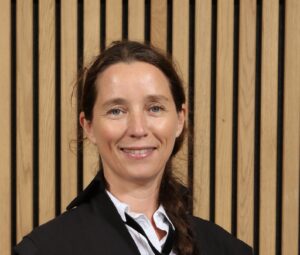
Michal Rosie Meroz is a registered midwife in the UK and a dual-registered nurse-midwife in Israel, currently working as a senior research midwife in London, supporting UK and international RH&C studies. With over 20 years’ experience in healthcare, she has a particular interest in culturally sensitive, women-centred maternity care and out-of-hospital births. She holds an MPH from the University of Haifa, Israel and an MSc in Evidence-Based Health Care from the University of Oxford. In 2024, she was awarded an NIHR Pre-Doctoral Clinical Academic Fellowship to explore Orthodox Jewish couples’ experience of accessing NHS maternity services.
A Yiddishe Mama: insider-outsider reflection notes following a Shabbat stay with one of the most observant communities in the UK
Opening notes
These reflective notes describe a Shabbat (Saturday, the day of rest) I spent with an Orthodox Jewish woman while preparing my research on Orthodox Jewish women’s experiences of NHS maternity services. Written in a first-person narrative, it explores rituals, hospitality and community life. The piece argues that experiential understanding can support midwives to provide culturally sensitive, respectful and woman-centred care for women from marginalised groups.
Stepping into the unknown
Tovi (pseudonym) was the first Orthodox contact I made for my research on Orthodox women and their interaction with the NHS maternity. When Tovi invited me to spend Shabbat with her in her home in an Orthodox neighbourhood, I was unsure how to respond. After all, we barely knew each other, and spending a whole weekend together could be quite intense.
Shabbat, in the eyes of Orthodox Jewish people, marks the day God completed creating the world. No work or creation is allowed, and the use of electricity, writing, cooking or driving is prohibited from Friday afternoon until Saturday evening. There are far more things you cannot do than things you can.
As an Orthodox woman, Tovi follows Jewish law (Halacha) and leads a strictly observant life. I am Israeli but secular; for me, Judaism is ethnicity and heritage. I do not observe Shabbat, and the last time I visited a synagogue was probably around 40 years ago, at my brother’s bar mitzvah. I am Jew-ish.
Shabbat has so many rules and restrictions, and I was concerned that I would do something wrong. Yet, that unfamiliarity felt like a mystery waiting to be unfolded. So I accepted.
Tovi told me that Shabbat would start at 4.18 pm. The plan was for her to pick me up around 3 pm so that we would arrive well in advance. This will allow us to switch off phones and all electric devices and prepare for Shabbat. God, however, had other plans. Tovi took a wrong turn and, with me giving directions over the phone, sped into my parking space at 3.50 pm. Like a Bonnie and Clyde spree, we made it just in time, arriving at her doorstep at exactly 4.18 pm. God bless the Nissan Micra.
Two Jewish women and so many synagogues
Tovi showed me to my room, a cosy space with a small bedside light already switched on and not to be touched again until Saturday evening, to avoid Chilul Shabbat (desecration of Shabbat). I switched off my phone and realised that, for the first time since owning a smartphone, I would spend 24 hours offline.
The Shabbat candles were on the table, and Tovi performed Hadlakat Nerot (lighting the candles) to distinguish the holy Shabbat from the mundane week. The candles she lit were the last thing we created until the following evening. Next came kiddush. Tovi filled a glass with grape juice and blessed: “Baruch Ata Adonai Eloheinu Melech Ha’olam, Borei Pri Hagafen.” Amen. Shabbat was officially in. Now what?
We decided to go to the synagogue. On the way out Tovi hid her keys, as Orthodox people are not permitted to ‘carry’ objects between private and public spaces on Shabbat. I was reminded of conversations I had previously had with Orthodox women through Patient and Public Involvement work. They explained that a pregnant woman is exempt under Pikuach Nefesh, where preservation of life overrides other religious rules. If hospital admission is required on Shabbat, she may carry pre-packed items. Her husband, however, is not permitted to carry anything and may spend the entire Shabbat without even basic belongings.
I was struck by the number of synagogues in almost every corner of this small British neighbourhood, bringing to mind the saying “two Jews-three synagogues”. Tovi explained that each Orthodox sect has its own synagogues. We arrived at a Vizhnitz synagogue (of the Ultra-Orthodox sect), where a group of children pointed and explained in Yiddish that ‘this is where the women go.’ I wondered how difficult it must be to navigate life, including healthcare, without speaking the local language.
We climbed to the Ezrat Nashim (women’s section). A woman approached, smiling, and asked who we were. When I introduced myself as Michal, a descendant of the Vizhnitz Farkash family, she looked impressed and offered us seats where you can see more, gesturing towards the rebbetzin, who acknowledged us with a nod. In these communities, belonging and family heritage matter deeply.
The service felt intensely authentic, as if I had been transported to an Eastern European town centuries ago. Below us, men prayed with such force and intention that the walls seemed to tremble. Watching, I thought of a pregnant Orthodox woman beginning to labour here and needing to be transferred rapidly into an NHS hospital: from the holiest of settings into a secular foreign environment.
The abundance of mothering
After the service, we went to Tovi’s neighbour’s for Shabbat dinner. Seven children filled the house. I joined them for Netilat Yadayim. The evening unfolded through cycles of prayer, eating and song. The mother, 28 weeks pregnant and caring for seven children, had prepared an abundant meal. I wanted to ask how she managed work, pregnancy, medical appointments and family life, but such discussions are not permitted on Shabbat, so we spoke instead about our families. Friends came and went, welcomed with warmth and generosity. Hospitality here was not symbolic; it was lived.
The mastery of feeding fourteen children
The following morning began with Kiddush and pre-heated coffee, followed by another synagogue visit. Tovi prayed with deep devotion, and I found myself almost envious of the sense of purpose her faith seemed to offer.
Later, we were welcomed into another home for a long Shabbat meal. The host, a Yiddish-speaking mother of fourteen grown children, fed her extended family without electricity, orchestrating a complex meal with much talent. After eating, the children played with their grandfather and the sense of togetherness was deeply moving. Some weeks later, on another home visit, I met a Chassidic woman who looked after two toddlers- one was her daughter and the second, her granddaughter.
Unholy: back to modern Britain
As Shabbat drew to a close, Tovi waited until she could see three stars before performing Havdalah, to mark the shift from holy Shabbat to the everyday week. Suddenly, the heating came on, the lights flickered back to life, and the spell was broken. It was January again, and we were back in England.
I thanked Tovi for her heartwarming hospitality and took the bus back to my non-Jewish British neighbourhood. Back home, I reflected on the remarkable ways Orthodox communities navigate life in a foreign environment. Shabbat restrictions, dress codes, rituals, language and gendered spaces are only some of the factors Orthodox women must negotiate alongside pregnancy and childbirth.
Closing notes
This reflective piece does not represent all Orthodox Jewish women, nor did it make me an insider. However, it reinforced for me, as a midwife and researcher, the importance of humility and curiosity. Cultural understanding cannot be achieved through guidelines alone. Sometimes we need to switch off our phone and be a guest in someone else’s world.
This reflection was written as part of Michal Rosie’s NIHR Pre-Doctoral Clinical Academic Fellowship (NIHR304873). The views expressed are those of the author and not necessarily those of NIHR.
Acknowledgements
I would like to express my sincere gratitude to my NIHR supervisors, Professor Christine McCourt and Professor Carol Rivas, for their guidance and wisdom throughout this journey.
My heartfelt thanks go to Tovi (pseudonym), who opened her home and welcomed me so warmly over Shabbat. I am also deeply grateful to Tova Schprecher and Sara Neiman, whose kindness and advice accompanied me along this path.
Related Search Packs
- L62 Cultural or religious birth and death rituals and practices
- MS75 Culturally sensitive maternity care